01.The Divergence in Expectations
A noticeable gap has emerged between the perceptions of artificial intelligence specialists and the general public regarding the timeline for major scientific discoveries. Industry insiders, working directly on advanced computational systems and foundational models, increasingly report that AI could soon power breakthroughs worthy of global accolades such as the Nobel Prize. While everyday users typically view AI through the lens of chatbots, productivity tools, and creative generators, technical experts observe a distinct trend: the rapid maturation of algorithmic systems capable of solving high-order scientific questions.
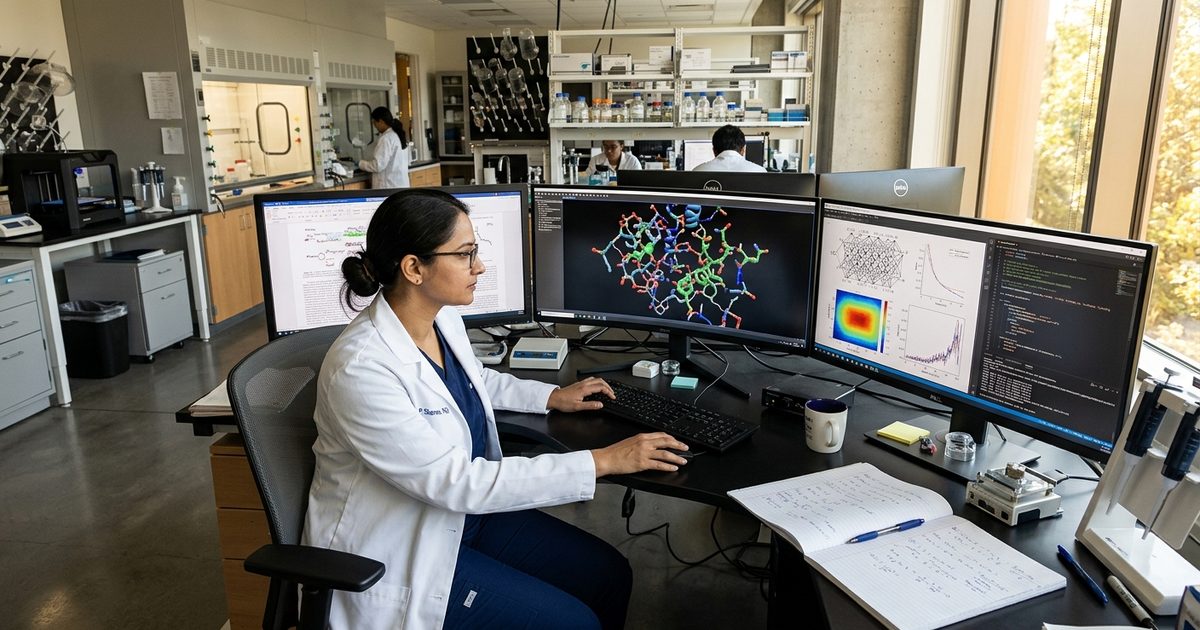
This divergence often stems from visibility into non-consumer applications. Behind closed laboratory doors, machine learning models are being deployed to parse immense scientific datasets, identify non-intuitive molecular structures, and simulate complex physical systems. Because the public largely interacts with consumer software, the profound shifts occurring across scientific computing remain less understood by mainstream audiences.
02.Defining Nobel-Grade Milestones
To describe a discovery as Nobel-level implies a fundamental advancement in human understanding, typically across disciplines such as medicine, chemistry, or physics. In computational biology, AI architectures have already demonstrated the ability to predict molecular interactions and model cellular behavior at speeds unimaginable with traditional wet-lab methods alone. Insiders believe the next frontier lies not just in accelerating existing experiments, but in autonomous hypothesis generation where systems identify entirely novel scientific principles.
When artificial intelligence aids in pinpointing new pharmaceutical compounds, mapping previously unresolved protein mechanisms, or modeling energy systems, it shifts from an automation tool into an active research partner. The growing bullishness among practitioners suggests that these advanced systems are nearing the threshold where computational outputs directly yield foundational, verifiable discoveries in fundamental science.
03.Strategic Relevance for India
For India, where scientific funding must be optimized and resource constraints can limit access to high-cost physical testing equipment, AI-driven discovery offers a transformative opportunity. Leading educational bodies such as the Indian Institutes of Technology and national research laboratories can utilize advanced machine learning workflows to conduct high-throughput virtual experiments before committing physical resources to validation.
Indian deep-tech startups and pharmaceutical innovators stand to gain substantial momentum. By integrating advanced machine learning pipelines into materials science, agriculture, and drug discovery, local enterprises can compete on a global stage without requiring the century-old physical infrastructure of legacy Western institutions. The insider optimism observed globally serves as a call for Indian researchers to pivot aggressively toward computational sciences.
04.Implications for Students and Tech Talent
The shift toward high-impact scientific AI signals a realignment in technical skill demands across the Indian engineering sector. While software developers historically focused on web, mobile, and enterprise IT development, the future of deep tech demands expertise at the intersection of computer science and core natural sciences. Students pursuing careers in technology should increasingly consider cross-disciplinary studies that bridge computational methods with biology, chemistry, and mathematics.
Institutions and educators must adapt curricula to meet this reality. Teaching predictive modeling alongside organic chemistry or statistical mechanics prepares Indian graduates not just to maintain enterprise software, but to build and operate the foundational research tools that drive modern scientific discovery.
05.Balancing Ambition with Rigorous Validation
While insider optimism reflects real technical progress, scientific discovery demands strict empirical validation and reproducibility. An AI model can propose an elegant molecular structure or mathematical theorem, but empirical confirmation through peer review and physical laboratory verification remains indispensable. Industry leaders recognize that closing the gap between mathematical prediction and physical proof is the primary hurdle before Nobel-caliber recognition is achieved.
As scientific models become more integrated into critical fields, maintaining transparent methodologies and robust safety evaluations will be essential. For researchers in India and worldwide, combining computational ambition with rigorous empirical verification will be key to turning theoretical breakthroughs into tangible, life-changing realities.
Frequently asked questions
Why are AI insiders more optimistic than the public about scientific breakthroughs?
Insiders work directly with advanced models applied to complex scientific data, allowing them to witness rapid technical progress that consumer-facing applications rarely showcase.
What constitutes a Nobel-level discovery in the context of artificial intelligence?
It refers to solving foundational problems in disciplines like medicine, physics, or chemistry, such as predicting complex molecular dynamics or discovering novel physical materials.
How can Indian students prepare for careers in AI-driven scientific research?
Students should cultivate interdisciplinary expertise by combining computer science and machine learning with core scientific domains like molecular biology, chemistry, or physics.