01.AI that picks up the phone
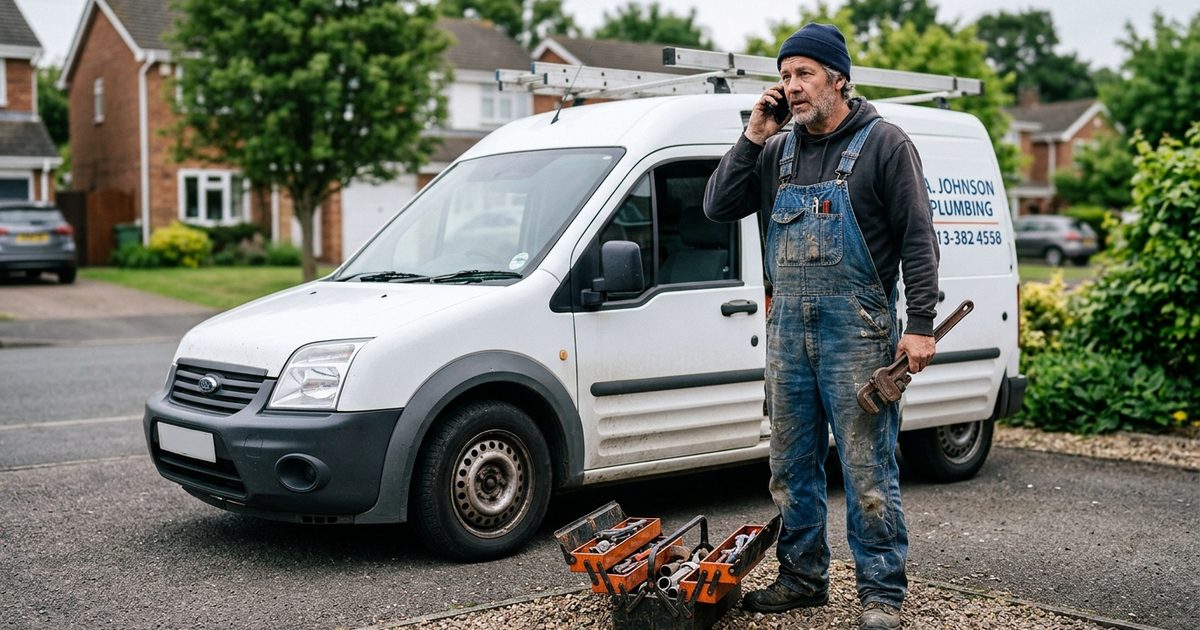
Broccoli AI, a San Francisco startup founded by two BITS Pilani alumni, builds AI voice assistants for plumbers, electricians and other home-service businesses. The assistant answers customer calls, books appointments, follows up on estimates, renews service memberships and re-engages customers who have gone quiet. The company sells to businesses in heating and cooling, roofing, solar, plumbing, pest control, electrical work, garage door repair and residential cleaning, and its platform connects to software contractors already use, including ServiceTitan, Salesforce and Housecall Pro.
The company says more than 1,500 home-service businesses use its platform, that its software has handled more than 10 million customer conversations and that it has booked 2.5 million service and sales appointments. Those are the company's own numbers and not audited figures, but they describe a narrow job done at scale: the phone call that a small contractor misses while standing on a ladder.
02.The money behind it
Broccoli raised $52 million across two rounds, a Series A and a Series B completed nine months apart. Khosla Ventures led both, with Y Combinator and Operator Partners also participating. The company had earlier raised $1.5 million in seed funding after going through Y Combinator. It says the new money will go into hiring and into widening what its software can handle across the customer journey.
The founders are AJ Jain and Aditya Ketkar, computer science graduates who met at BITS Pilani in 2016 and have been building companies together since 2017. Jain began his career at Adobe, while Ketkar, now the chief technology officer, worked as a software engineer at Microsoft and as a researcher at the Computer Vision Center at UAB Barcelona. Their earlier ventures included a delivery app for closed college campuses, an interview preparation boot camp and Telematica, a Y Combinator-backed startup building a universal API for electric vehicles that took them to London.
03.Why they started by knocking on doors
None of those earlier businesses scaled, so when the pair reached San Francisco in January 2024 they did not begin with a product. They spent the spring of 2024 visiting around 140 contractors' offices across Northern California to watch how the work actually runs. The product that came out of that research does the least glamorous task in the business: it answers the phone.
The lesson there is plain for anyone building for small businesses. The buyer is busy, the product has to fit work that is already happening, and the pitch is judged on one thing only, whether the missed call gets answered. Contractors do not buy technology because it is new. They buy it because a booked job is money, and because a system that quietly loses calls is a cost they can feel every month.
04.What it means for Indian small businesses
Indian small businesses live with the same problem. A plumber, a clinic receptionist, a coaching centre or a small agency gets a call, nobody picks up, and the customer dials the next number on the list. Voice AI systems that answer, qualify and book in Indian languages are already being built by Indian startups, and the cost of running speech and language models has dropped sharply over the past two years. For a business that cannot afford a full-time receptionist, that shift is the difference between a missed call and a confirmed booking.
Language is where most global products stumble in India. Accents change every few hundred kilometres, customers mix two or three languages in one sentence, and a shop is rarely a quiet place. A voice system that gets the name wrong or books the wrong slot loses the customer faster than a missed call would. The other idea worth borrowing from Broccoli is the pricing model: it sells the finished job, a booked appointment, rather than a software licence that the owner has to learn and operate.
05.For students and working professionals
The founders' route is worth noting. Two engineering graduates from an Indian campus, three ventures that did not scale, and then a narrow product for an industry nobody calls fashionable. The technical work behind it is not exotic either: telephony, speech recognition, scheduling, integrations and careful measurement of what the AI gets right.
For people in reception, support, back-office or accounting roles, this kind of story cuts both ways. The repetitive part of the job is exactly what gets automated first, and the judgement part becomes the job. The skill worth building now is knowing what an AI system should decide on its own, what it must hand to a person, and how to check that it did either correctly. Broccoli's own pitch leans on that split: routine calls go to the software, while the awkward or urgent ones are still meant to reach a human who can handle them.
Frequently asked questions
What exactly does Broccoli AI sell?
AI voice assistants that answer customer calls, book appointments, chase estimates and renew service memberships for home-service businesses. It is sold as a service to contractors, not as standalone software.
Who funded the company and how much?
Khosla Ventures led both the Series A and Series B, which together came to $52 million, with Y Combinator and Operator Partners participating. The company had earlier raised $1.5 million in seed funding.
Is this relevant to small businesses in India?
Yes. Missed calls cost Indian trades and clinics the same way they cost American ones, and voice AI that works in Indian languages is already available. The hard part is accuracy in real, noisy conditions.