01.Moving Towards Battlefield AI
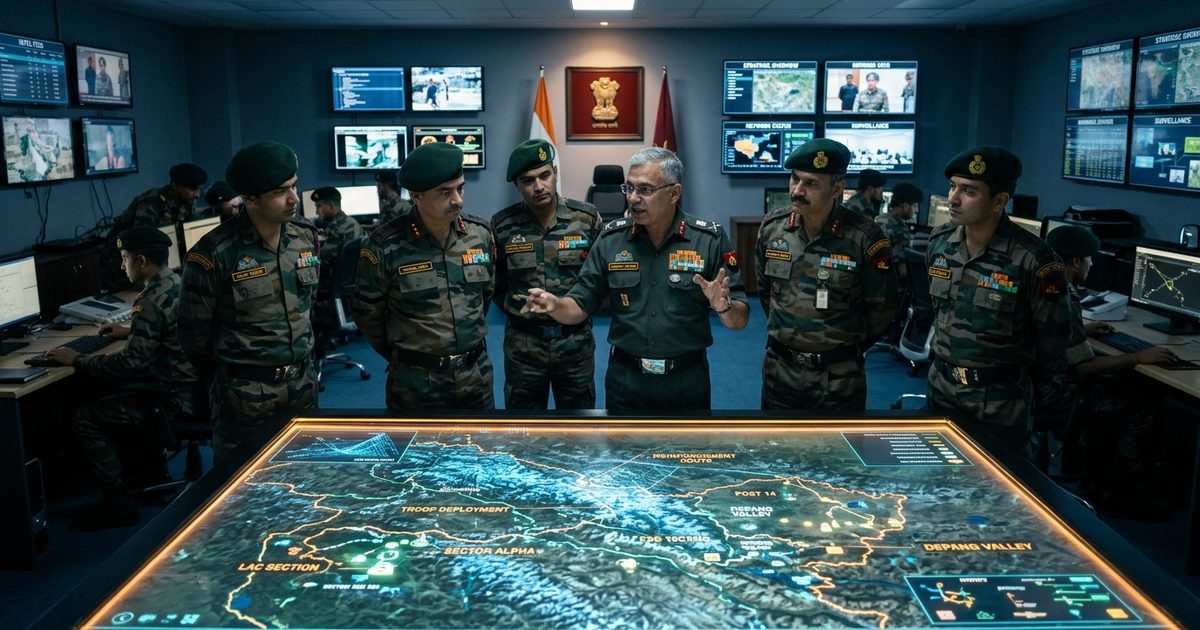
The Indian military is actively taking steps to incorporate artificial intelligence into battlefield environments, according to reporting by The Economic Times. The exploration of an indigenous artificial intelligence capability reflects a broader global shift where algorithmic intelligence and computational systems are increasingly seen as integral components of operational readiness. Rather than relying on foreign software ecosystems, national security planning is placing focus directly on domestic technological development.
Integrating artificial intelligence into operational frameworks demands robust infrastructure, reliable real-time data processing, and highly dependable decision-support systems. In defence domains worldwide, intelligent systems are used for surveillance analysis, automated threat detection, and logistical forecasting. By turning attention toward battlefield deployments, Indian defence planning emphasizes modernizing tactical workflows with sovereign computational capabilities.
02.Understanding the Indigenous Kill Chain Concept
At the core of recent discussions is the concept of an indigenous, or desi, artificial intelligence kill chain. In military terminology, a kill chain describes the end-to-end cycle of identifying, tracking, targeting, and responding to a potential threat. Introducing artificial intelligence into this cycle involves leveraging automated software to speed up situational awareness, analyze sensor outputs, and assist command structures in evaluating tactical choices under tight time constraints.
An indigenous focus ensures that the underlying software, training pipelines, and decision-making logic remain developed and verified within the country. Reliance on foreign codebases or unvetted algorithmic models can introduce security risks, data exposure, and external dependencies during critical moments. Building a domestic framework helps ensure strategic autonomy and tailored operational responses suited to regional security requirements.
03.Relevance for Indian Tech Talent and Startups
The transition toward indigenous defence technology carries wide implications for the domestic innovation ecosystem, including software engineers, researchers, and deep-tech entrepreneurs. Developing resilient systems that function under high-stress, low-connectivity conditions requires expertise across computer vision, natural language processing, edge computing, and robust cyber defences. These demanding requirements cannot be addressed solely through off-the-shelf commercial tools.
Indian startups and academic research institutions are uniquely positioned to address the specialized computational needs of defence use cases. As modern hardware and algorithmic architectures evolve, there is significant room for domestic innovators to collaborate and build high-performance systems capable of operating reliably on edge devices without relying on continuous cloud connectivity or centralized servers.
04.Navigating Technical and Ethical Demands
Deploying automated systems in battlefield situations presents notable engineering hurdles. Machine learning models must be resilient against electronic warfare, adversarial data manipulation, and edge-case errors that could produce false alarms. Establishing verifiable reliability and interpretability is critical before algorithms can be entrusted with supporting mission-critical tactical assessments.
Beyond software engineering challenges, the concept of an algorithmic kill chain brings operational ethics and chain-of-command protocols to the forefront. Modern military institutions typically emphasize human oversight to ensure accountability, requiring system architects to design clear human-in-the-loop interfaces. Balancing rapid automated decision assistance with human command remains a defining consideration as these technologies mature.
05.Strategic Independence in Modern Defence
Emphasizing home-grown artificial intelligence capabilities marks an evolution in national strategic self-reliance. Modern sovereignty increasingly depends on software integrity, secure communications, and independent computational infrastructure as much as conventional hardware. Fostering a domestic ecosystem for strategic technology ensures that key national assets remain self-reliant against shifting global supply chains.
For the wider Indian technology sector, the move toward battlefield systems signals that sovereign digital infrastructure is expanding beyond civilian and enterprise spheres into core security domains. Sustaining this momentum will depend on ongoing coordination between strategic institutions, academic laboratories, and domestic developers working on mission-critical applications.
Frequently asked questions
What does an AI kill chain mean in military operations?
It refers to using artificial intelligence across the stages of identifying, tracking, assessing, and engaging potential threats to assist military decision-making.
Why is an indigenous approach important for defence AI?
Developing capabilities internally reduces reliance on foreign software, protects sensitive operational data, and prevents vulnerabilities during critical missions.
Who reported on the Indian military moves toward battlefield AI?
The development was reported by The Economic Times, highlighting India's steps toward developing indigenous battlefield artificial intelligence systems.