01.The Physical Foundation of Digital Intelligence
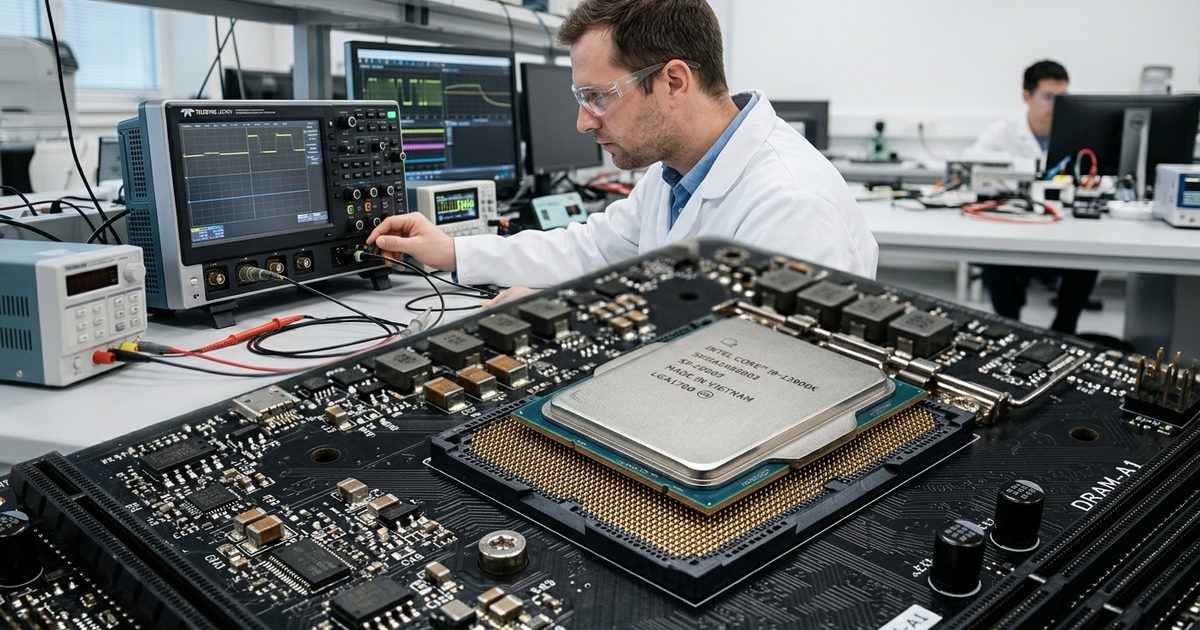
The global artificial intelligence landscape relies fundamentally on specialized silicon engineered to process complex matrix mathematics at unprecedented speed. While algorithms capture public attention, modern computational models cannot exist without the microscopic transistors and microprocessors that power large-scale training and inference workloads. Across India, as public institutions, enterprise organizations, and technology startups accelerate their adoption of advanced computing solutions, the physical availability of these diminutive components has surfaced as a defining constraint.
The reality of developing artificial intelligence tools is that software innovation cannot outpace the physical hardware that hosts it. When specialized processors face manufacturing delays, allocation quotas, or high import hurdles, the velocity of research and deployment slows across the entire ecosystem. For an economy focused on scaling digital public infrastructure and supporting a burgeoning developer base, addressing the realities of physical hardware access is quickly becoming an unavoidable strategic priority.
02.Operational Friction for Startups and Researchers
For emerging ventures and academic laboratories operating within India, restricted access to cutting-edge chips translates directly into higher financial outlays and longer development timelines. Procuring physical compute hardware requires significant capital, while securing reserved cloud instances that run on high-performance accelerators often involves high recurring costs and rigid contracts. This disparity can establish an uneven playing field where well-capitalized global conglomerates move rapidly, while local innovators face structural headwinds simply testing basic prototypes.
Furthermore, the reliance on constrained processing power restricts the scale of experimentation. Training foundational models tailored to regional languages, localized socio-economic contexts, and domestic industrial applications requires sustained access to extensive computational clusters. When hardware is scarce, researchers are frequently compelled to downscale project ambitions, utilize smaller datasets, or wait weeks for processing queues to clear before evaluating results.
03.The Strategic Risk of External Compute Dependencies
Relying extensively on international supply chains and foreign cloud data centers introduces distinct operational vulnerabilities. While remote compute environments provide immediate access to modern processing clusters without requiring immediate physical deployment on domestic soil, the associated foreign exchange outflows and operating expenses expand rapidly as consumer adoption grows. Over time, recurring compute bills can erode the margins of domestic digital enterprises.
Beyond economic considerations, technological self-reliance depends on having resilient access to processing power that cannot be abruptly interrupted by global logistical snarls, foreign export controls, or sudden market reallocations. As artificial intelligence integrates deeply into governance, healthcare delivery, and financial systems, the physical infrastructure supporting these services must be insulated from unexpected disruptions in global chip availability.
04.Bridging the Gap Through Optimization and Hardware Awareness
In response to hardware bottlenecks, software efficiency has emerged as a critical discipline. Indian engineers and researchers are increasingly adopting techniques such as model quantization, parameter-efficient fine-tuning, and algorithmic pruning to extract maximum utility from standard computing resources. By optimizing code to run on less specialized hardware or smaller memory footprints, teams can deliver capable intelligent systems without waiting for top-tier silicon.
Simultaneously, this constraint is reshaping engineering priorities across academic curricula and industry training programs. For students and technology professionals in India, understanding microprocessor architectures, memory bandwidth limits, and parallel processing frameworks is becoming as essential as mastering high-level programming frameworks. Bridging the gap between software logic and hardware execution will ultimately determine how effectively the country navigates physical supply limitations.
Frequently asked questions
Why are small chips considered a bottleneck for AI in India?
Advanced artificial intelligence requires specialized microprocessors to run large workloads, and limited access or high procurement costs slow down research, experimentation, and enterprise deployment.
How can software developers address the hardware shortage?
Developers can implement efficiency-oriented techniques such as model quantization, parameter-efficient fine-tuning, and algorithmic compression to achieve high performance on limited compute.
Does this bottleneck affect non-enterprise users and students?
Yes, hardware shortages inflate cloud usage costs and restrict free computational tiers, making hands-on experimentation more difficult for students, independent builders, and early-stage researchers.