01.What Goa announced
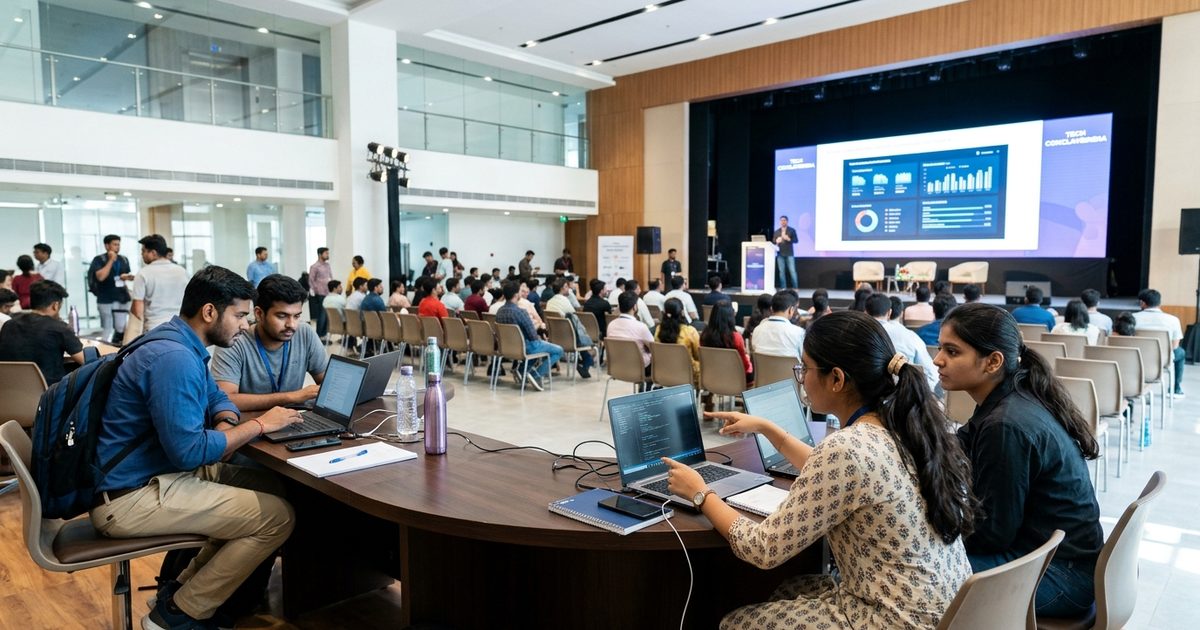
Goa unveiled its AI Policy 2026 at the inaugural Goa AI Tech Conclave 2026, held in Panaji on 22 October. The state said it wants to build an artificial intelligence ecosystem that spans governance, startups, education and industry, and to expand its identity beyond tourism. Addressing the event, Goa's IT Minister Rohan Khaunte said, Tech isn't the future, it's the present, and stressed that technology should be treated as an immediate priority rather than a distant prospect.
The policy sets out a three-year framework for 2026 to 2029 and rests on five pillars: skilling and capacity building; startups and industries; capital and investments; policy, governance and infrastructure; and responsible, safe and ethical AI. The state also outlined the Goa AI Mission 2027, which is meant to use AI to improve public service delivery, enable citizen-centric governance and create new economic opportunities. As part of its infrastructure push, the government announced an IT Techno Centre in Porvorim that will bring together technology infrastructure, incubation spaces and collaborative work hubs to support the state's growing technology ecosystem.
02.A Konkani language model and local content
A key focus of the plan is technology built around the state's own language and administrative needs. Digital India BHASHINI is working with Goa to develop a Konkani Large Language Model, following a memorandum of understanding signed with the department six months ago. The Higher Education Department and the Directorate of Official Languages are involved in the effort, and the aim is to support localised AI applications for governance.
The state is also using BHASHINI's BhashaDaan initiative to collect text and audio data from citizens, students and language experts to help train these language models. A separate initiative called Granthika is designed to support the digitisation and preservation of historical, legal and manuscript heritage, including by engaging elderly citizens in the process. Taken together, these steps show how a state is trying to make AI work in a language that its own residents use every day.
03.Hackathon, skilling and a BITS Pilani centre
The conclave saw the launch of the Goa AI Hackathon, which is expected to encourage the development of AI-led solutions for governance and public service delivery. The Department of Information Technology, Electronics and Communications also signed an MoU with BITS Pilani Goa to establish an AI Centre of Excellence. The initiative is intended to strengthen collaboration between academia and the technology ecosystem while supporting research, innovation and AI adoption.
On the skilling side, the state showcased its first cohort of 10 AI trainees trained by TAWAI Studio. According to the government, the trainees have already begun turning their training into employment, with one participant, Shradha Sawant, securing a placement at McLaren Strategic Solutions. Separately, 12 Drone Didis who completed foundational drone training were felicitated as they prepare to progress to more advanced courses. The two-day event, held under the theme AI for People, Planet and Progress, featured 30 technology experience zones and brought together technology companies, startups, policymakers, academics and students.
04.What it means for students and small businesses
For students in Goa and elsewhere, the clearest signal is that skilling programmes and a new Centre of Excellence are being set up closer to home, which could mean more chances to learn AI without moving to a big metro. The Konkani language model is a reminder that regional languages are becoming a serious part of India's AI plans, a shift that matters for anyone who wants to build or use tools in a language other than English.
For small businesses, the emphasis on governance, startups and applied innovation suggests that state support, from incubation space to a hackathon and easier access to local AI tools, may gradually reach beyond large companies. Small firms in tourism, retail and services could be early users of tools built for local languages and local workflows. Because the policy is a three-year framework, the real test will be how much of it moves from announcements into working projects.
05.What to watch next
Goa's plan joins a wider push by Indian states to claim a share of the AI economy, alongside national efforts such as the IndiaAI Mission. The policy's success will depend on execution: whether the Konkani model reaches a usable standard, whether the hackathon produces projects that are actually deployed, and whether the Centre of Excellence builds lasting research capacity rather than a one-time announcement.
For now, the announcements mark Goa's attempt to widen its economy beyond tourism and position itself as a hub for responsible AI and applied innovation. Readers who want to follow the story can watch for the first outputs of the Goa AI Hackathon, updates on the Konkani language model, and the opening of the IT Techno Centre in Porvorim.
Frequently asked questions
What is the Goa AI Policy 2026?
It is a three-year framework for 2026 to 2029 that aims to make Goa a hub for responsible AI and applied innovation, built on five pillars covering skilling, startups, investment, governance and ethics.
What is the Konkani Large Language Model?
It is a language model being developed by Digital India BHASHINI with the Goa government to support AI applications in Konkani, mainly for governance and public services.
Who is the AI Centre of Excellence meant for?
Goa signed an MoU with BITS Pilani Goa to set up the centre, which is intended to link academia with the state's technology ecosystem and support research, innovation and AI adoption.