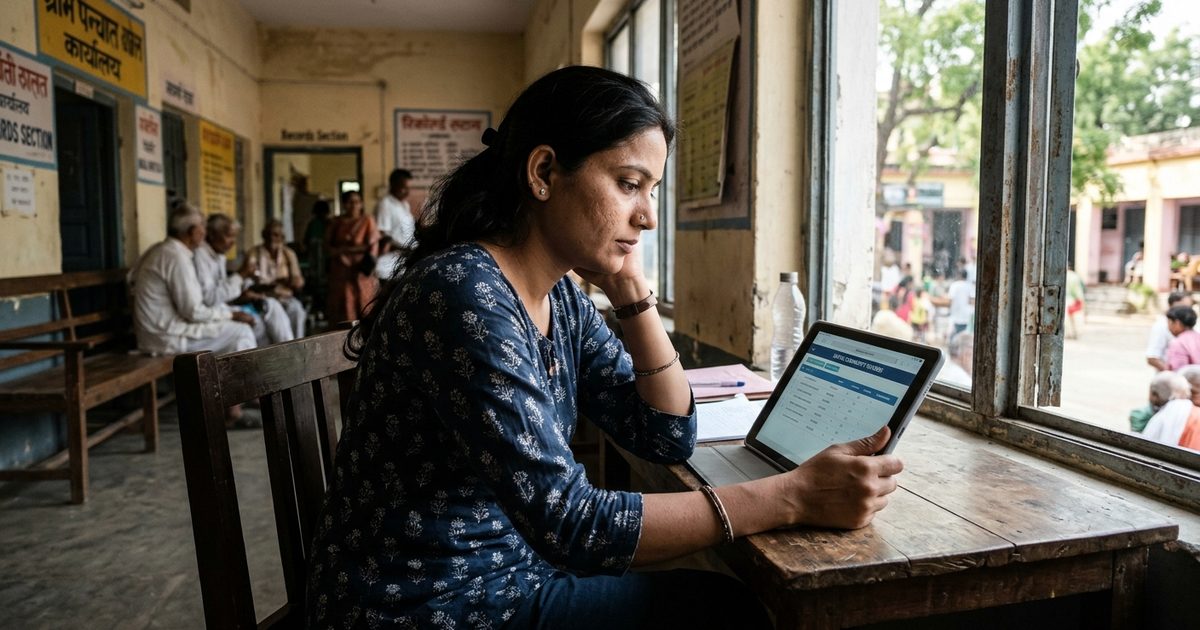
01.The Emerging Need for a Modern Safety Net
As artificial intelligence continues to reshape industries around the world, the fundamental assumptions governing social protection and public welfare are coming under intense scrutiny. In India, where millions rely on formal and informal safety nets for daily sustenance, the rise of advanced automation poses unique challenges. The traditional models of social assistance were largely designed around industrial and agricultural economies, focusing on cyclical poverty, seasonal agricultural distress, and basic health or food subsidies. However, the systemic shifts brought about by AI require an updated approach that anticipates structural disruptions in everyday livelihoods.
Rethinking public welfare in this context is not merely about expanding budgets or offering temporary relief packages. It involves evaluating how technology alters the very nature of earning opportunities and whether existing social support systems can absorb shocks across both white-collar and blue-collar sectors. For a nation with a vast workforce transitioning toward a digital economy, creating resilient and flexible welfare mechanisms will be essential to ensure that progress does not leave vulnerable segments behind.
02.Shifts in the Labour Market and Livelihoods
Artificial intelligence applications are expanding beyond routine automation to encompass decision-making, creative workflows, customer service, and technical tasks. In India, where services and technical support represent major engines of economic mobility for young professionals, these technological capabilities introduce uncertainty regarding job creation and career longevity. When routine tasks are handled by software models, entry-level roles that once served as gateways into the formal economy may decline or transform substantially.
At the same time, the informal sector and gig economy, which absorb significant numbers of workers, remain exposed to algorithmic management and shifting business models. As market dynamics fluctuate in response to technological deployment, workers face risks of income volatility and sudden disruption without adequate institutional backup. A revised public welfare framework must therefore consider how to provide sustained security and transitional support for individuals whose livelihoods are displaced or altered by intelligent systems.
03.Rethinking the Mechanisms of Public Support
Modernising social assistance requires exploring new mechanisms for delivering support. Traditional safety nets often depend on static criteria, such as verified poverty thresholds or specific sector classifications, which may fail to capture sudden technological displacement. In an AI-influenced environment, economic vulnerability can emerge rapidly in segments of the population that were previously considered financially secure and self-sufficient.
Policymakers and researchers are examining whether income support programs, adaptive digital safety nets, and continuous reskilling allowances can be integrated into the national welfare architecture. By building flexible and responsive distribution models, public welfare programs can deliver timely interventions before distress leads to long-term economic hardship. Ensuring that these systems remain equitable, transparent, and universally accessible is crucial to sustaining broad public trust.
04.Balancing Innovation with Social Stability
Achieving a balance between technological leadership and citizen welfare is among the most consequential governance tasks facing the country. While artificial intelligence offers substantial potential to drive productivity, improve public service delivery, and boost national output, its domestic benefits will be compromised if widespread displacement occurs without adequate protection. A forward-looking policy stance recognises that economic innovation and social protection are complementary rather than opposing priorities.
For Indian entrepreneurs, students, and working professionals, an evolved safety net provides the confidence required to adapt to emerging market realities, take calculated risks, and participate in the evolving digital landscape. Crafting a resilient welfare structure today will ensure that the socioeconomic foundations of the country remain robust as artificial intelligence matures into an everyday feature of public and private enterprise.
Frequently asked questions
Why does India need to rethink its welfare policies for the AI age?
Traditional welfare systems are built for conventional economic cycles, whereas artificial intelligence introduces rapid structural shifts in jobs and livelihoods that require more adaptive safety nets.
Who could be most affected by AI disruptions in the workforce?
Both service sector professionals facing routine task automation and informal or gig workers exposed to algorithmic shifts could experience income instability without updated support systems.
What should an updated public welfare framework focus on?
It should focus on flexible income support, rapid response mechanisms for displaced workers, and accessible continuous learning systems that maintain social stability during transitions.