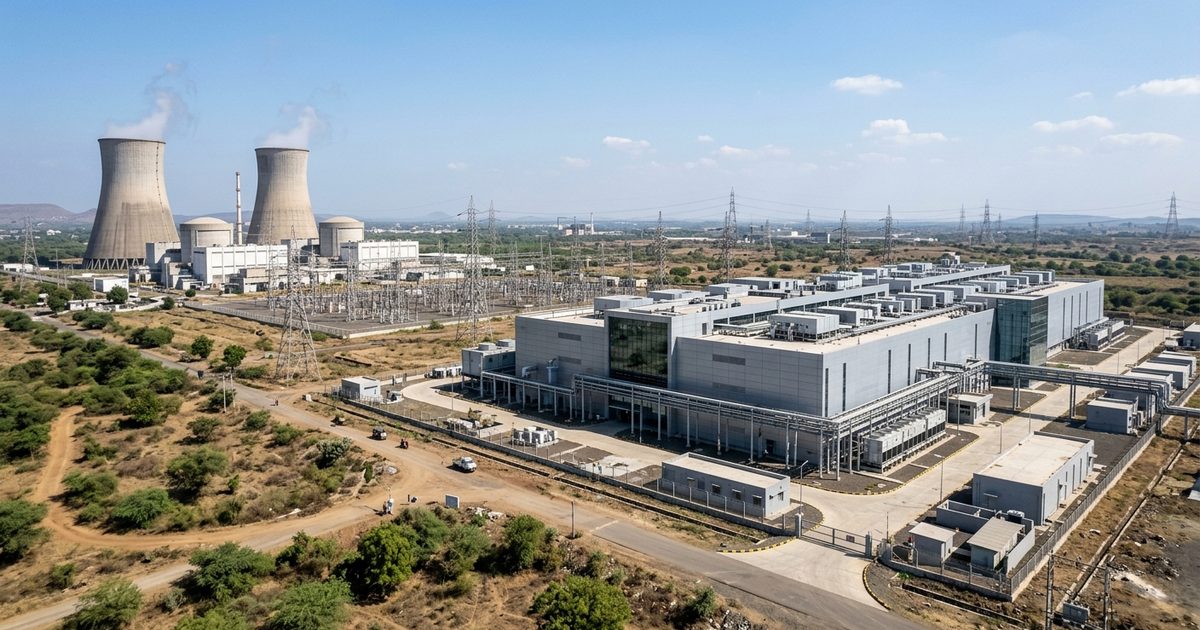
01.Powering the Next Wave of Indian Compute
The expansion of artificial intelligence applications, cloud services, and machine learning workloads across India is creating unprecedented pressure on the national energy architecture. Modern computing clusters run continuous training cycles and high-frequency inference tasks that require vast amounts of electricity. To keep pace with this surging demand, India is targeting nuclear power as a viable, sustained source of generation specifically geared toward supporting data centre growth and digital infrastructure.
For students, technology professionals, and founders building across the country, compute availability is rapidly emerging as a foundational pillar of competitive advantage. Traditional grid resources face competing priorities from manufacturing, urbanization, and consumer demand. By focusing directly on dedicated, high-capacity nuclear energy, the strategy seeks to decouple computing expansion from conventional fossil fuel constraints while ensuring round-the-clock availability for critical digital operations.
02.The Search for Reliable Baseload Energy
Data centres are unique industrial consumers because they cannot afford power interruptions or wide fluctuations in supply. While renewable sources such as solar and wind play an essential role in greening the electrical grid, their intermittent generation profiles require extensive storage mechanisms to deliver constant electricity. Nuclear generation offers continuous, predictable baseload output with low greenhouse gas emissions during operations, matching the uninterrupted operational rhythms of large server farms.
Directing nuclear power toward technology infrastructure reflects a growing international trend, but with distinct local importance for India. By exploring nuclear energy solutions for digital facilities, the country can maintain momentum in sovereign data localization, enterprise cloud hosting, and large-scale model experimentation without adding disproportionate carbon overhead to national power grids.
03.Opportunities for the Domestic Enterprise Ecosystem
Integrating nuclear power with data infrastructure has direct implications for Indian enterprise leaders and tech entrepreneurs. High power tariffs and grid instability often represent a significant portion of operational expenses for domestic server operators. A deliberate focus on nuclear power for enterprise computing could provide stable, long-term power pricing, helping domestic cloud providers and hosting firms remain competitive against global hyperscalers.
Moreover, businesses processing sensitive workloads locally require assurance that operations can scale without triggering regional power shortages. As Indian enterprises adopt advanced analytics, natural language systems, and computer vision tools into their everyday workflows, reliable power supplies directly protect service availability and economic productivity.
04.Balancing Compute Growth with Environmental Goals
Modern artificial intelligence systems are heavily scrutinized for their environmental footprint, particularly around carbon emissions and water consumption used for cooling. By prioritizing nuclear energy, India seeks to demonstrate that accelerated digital expansion does not have to come at the expense of environmental commitments. Clean power generation allows data hubs to meet carbon reduction targets while handling computational tasks of significant magnitude.
This strategic alignment is particularly relevant as international investors and institutional partners increasingly enforce environmental, social, and governance standards on infrastructure projects. Facilities powered by clean, reliable baseload energy are better positioned to attract investment, establish international partnerships, and secure long-term computing agreements from global firms seeking sustainable hosting regions.
05.The Emerging Intersection of Energy and Engineering
For students and technical professionals in India, the convergence of energy planning and digital systems signals the rise of new interdisciplinary domains. Designing, managing, and maintaining digital infrastructure will increasingly require expertise spanning data centre engineering, high-efficiency electrical distribution, and energy optimization. The integration of advanced power generation with modern computing campuses creates opportunities beyond pure software development, reaching deep into industrial design and grid management.
As India advances its technological ecosystem, the relationship between generation capacity and computational performance will remain tightly linked. Targeting nuclear energy for high-performance computing demonstrates that long-term digital growth depends just as much on physical infrastructure and energy security as it does on software algorithms.
Frequently asked questions
Why is nuclear power being targeted for data centres in India?
Data centres require constant, reliable electricity to operate without interruption, and nuclear energy provides steady baseload power with low operational carbon emissions.
How does this focus on nuclear energy benefit Indian AI startups?
Stable and abundant clean energy helps secure compute infrastructure locally, lowering long-term hosting volatility and supporting scalable digital services across the country.
Can renewable energy like solar fully replace the need for nuclear power in AI computing?
Renewable sources like solar are intermittent and require large battery systems for continuous output, whereas nuclear power offers uninterrupted baseload generation required by data centres.