01.Modernizing the National Power Ecosystem
The Central Electricity Authority has organized a focused conference aimed at integrating artificial intelligence throughout India's power sector. As the country's statutory body responsible for technical planning and policy advisory in electricity, the authority's engagement with emerging software highlights a deliberate institutional shift toward smarter, data-driven utility operations.
For Indian engineers, technology providers, and policy observers, the initiative underlines an accelerating push to blend computational intelligence with traditional operational infrastructure. The national power sector serves as the foundation for broader industrial growth, making system reliability and automated efficiency vital priorities for sustained economic momentum.
02.Practical Avenues for AI in Grid Operations
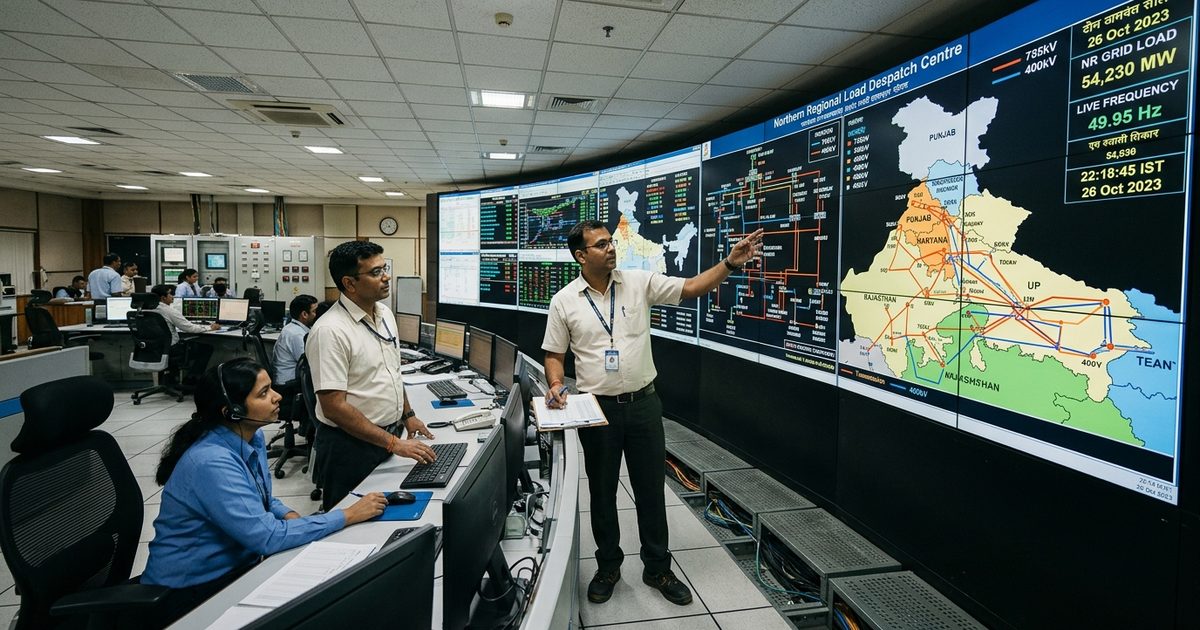
Adopting artificial intelligence in electricity systems addresses several longstanding operational bottlenecks. Power grids demand instantaneous coordination between energy generation and consumer draw to maintain frequency stability. Machine learning models can analyze massive volumes of real-time telemetry from transmission lines and substations, enabling grid managers to forecast local and regional electricity demand with superior precision.
Beyond demand management, predictive maintenance offers significant benefits for utility operations. High-voltage transformers, transmission towers, and generating units undergo continuous thermal and environmental stress. Automated algorithms that monitor sensor feeds can detect equipment deterioration early, preventing unexpected outages and reducing repair expenditures for distribution utilities.
03.Renewable Integration and Transition Support
India continues to install substantial solar and wind capacities across various states to support sustainable energy goals. However, renewable sources are inherently weather-dependent, leading to rapid fluctuations in generation output. Integrating these decentralized, variable sources into the synchronized national grid presents complex operational challenges that standard manual controls cannot easily solve.
Intelligent dispatch software can parse weather forecasts, past generation curves, and transmission capacity to continuously optimize energy distribution between thermal baseloads and green alternatives. Applying AI tools to this process ensures the grid remains resilient while maximizing the proportion of clean energy utilized across the country.
04.Opportunities for Tech Startups and Engineers
The authority's focus on AI enablement signals an expanding market for Indian software developers, data scientists, and energy-tech enterprises. Historically, public utility projects have operated with conventional engineering solutions, but institutional attention creates clearer pathways for domestic technology companies to introduce modern predictive analytics and monitoring platforms.
Startups developing computer vision for power line surveys, automated grid analysis, and substation diagnostics could find increased demand across state utilities. For students and technical professionals, the intersection of electrical infrastructure and machine learning represents an expanding domain for practical engineering careers within India.
05.The Path Forward for Implementation
Transforming high-level discussions into functioning deployments will require coordinated steps across state distribution companies, transmission agencies, and technology partners. Because electricity infrastructure constitutes critical national assets, data security, robust software validation, and local workforce upskilling will be critical components of any automated rollouts.
By establishing initial dialogues around artificial intelligence, the Central Electricity Authority has laid the groundwork for policy and technological harmonization. Continued coordination will determine how quickly domestic utilities can transition from legacy management approaches to agile, intelligent energy networks.
Frequently asked questions
What is the Central Electricity Authority's recent initiative about?
The CEA convened a specialized conference to explore how artificial intelligence can be systematically adopted to modernize and optimize India's power sector.
How can artificial intelligence assist India's electricity grid?
AI can improve demand forecasting accuracy, enable predictive maintenance on equipment, and help integrate fluctuating solar and wind generation into the national grid.
What does this focus mean for Indian technology professionals?
It highlights expanding demand for data engineers, AI specialists, and energy-tech startups capable of building specialized software for power distribution and grid monitoring.